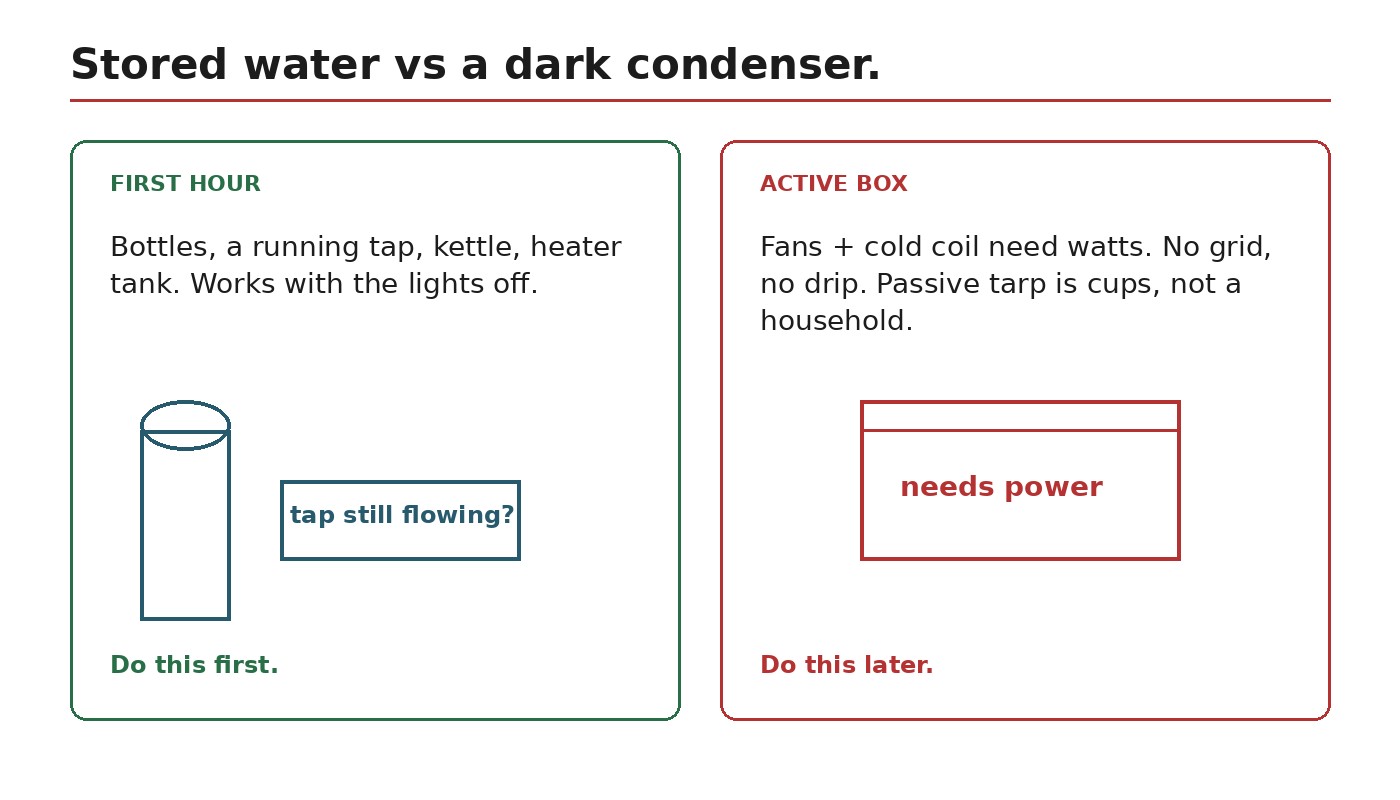
The front page is the method: cool a surface, catch the drips, treat what you get. This page is the outage version of that method. When the tap dies with the grid, condensation is a backup skill. It is not the first hour.
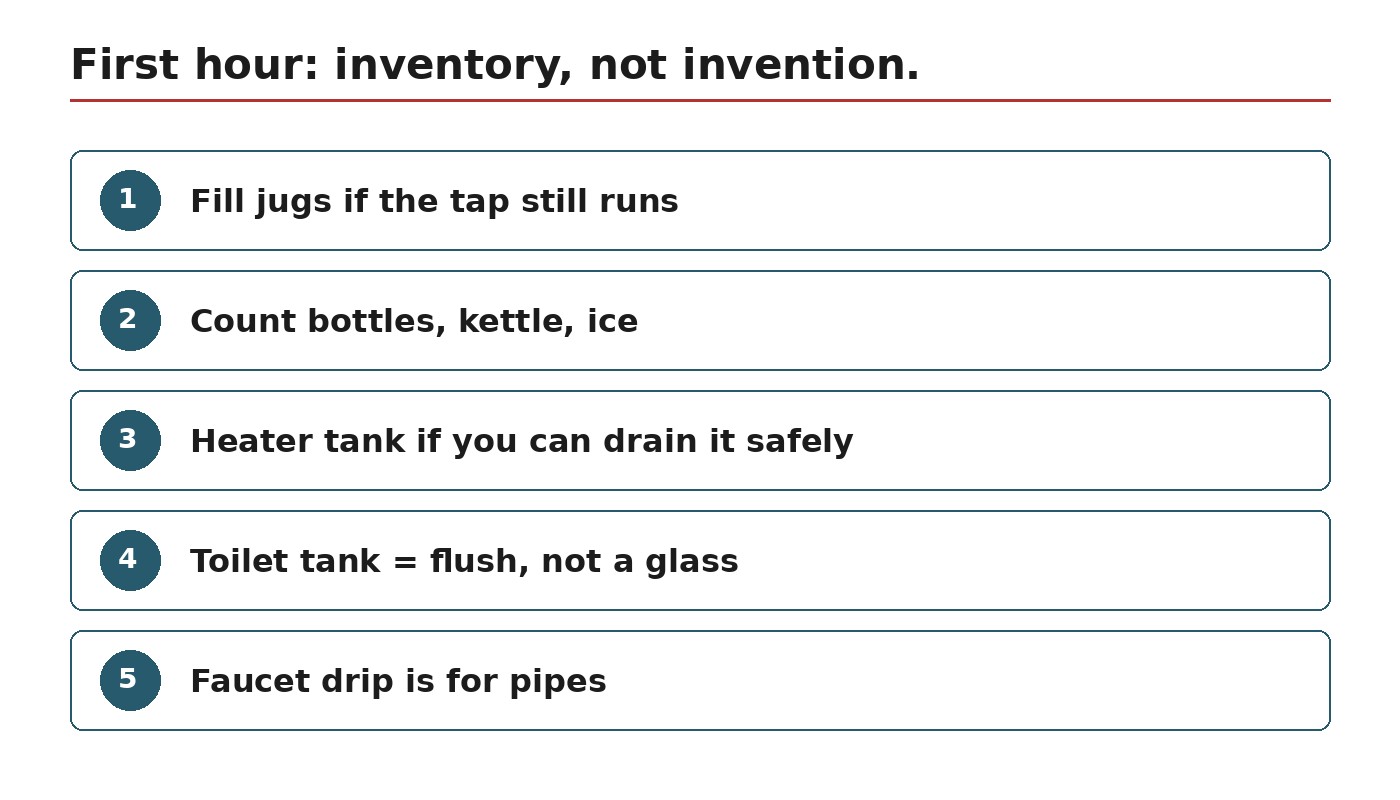
The first hour on the blackout side is inventory: fill jugs while anything still flows, count bottles, keep the fridge shut, drip a pipe if freeze is the risk. That page is here:
When the tap stops during a power outage
An active atmospheric water generator or a dehumidifier-style condenser needs electricity. Fans and a cold coil are loads. No grid, no compressor, no drip. Solar and batteries can cover a small unit if you already own that stack and the numbers work. Most houses in a short outage do not.
Passive dew or a tarp overnight can run with no watts. Yield is often a cup to a few liters in the right weather. A dry, closed, winter indoor room is a bad site. Do not plan a family on that cup.
Even with power, dry air gives little water. A winter house with the heat off is often dry. A muggy coastal night is a better condenser night than a cold inland blackout. The physics do not change because you are in a hurry.
Treat any “unlimited gallons from thin air” claim as marketing. Measure the room. If you would not run a dehumidifier there on a normal Tuesday, you will not fill jugs there on a dark Wednesday. The climate page is here:
Humidity limits and water-from-air yield
Same order as the tap-stops page, restated from this side of the stack:
Only after that inventory does a dew sheet, a clean dehumidifier drain, or a written AWG-style plan belong in the conversation.
If the outage is over and you want a condensation backup for the next dry spell, the front page already compares a commercial AWG to a hardware-store build. The paid digital guide this site uses for that cheap side is Water Freedom System, sold through ClickBank. It is blueprints and a parts list, not a machine in a box, and not a well pump.
Water Freedom System — DIY water-from-air guide
This page uses an affiliate link. If you buy, we may earn a commission.
Build it when you have time and power to test yield. Do not start a Peltier stack at hour one of a blackout while the tap is still dripping into the sink.
A winter outage is often a heat problem and a water problem at once. One closed room and no indoor combustion that is not rated for it live on the blackout front:
How to heat a house during a power outage
A well pump and a furnace blower are both electric starts. A small generator that can cover one may not cover both. Do not stack them and hope.
Can I run a water-from-air box during an outage?
Only if it is passive, or if you have spare watts that are not already promised to a furnace or a fridge. Most active boxes sit dark until the grid or a legal generator is back.
Is condensate from a dehumidifier drinking water?
Not by itself. Coils and trays pick up dust and microbes. Food-grade path, then filter and disinfect, or do not drink it. That page is here:
Treat condensate before you drink
What should I do in the first hour instead?
Inventory. The outage water page on the heat domain walks that hour.
What do you actually get with Water Freedom System?
A digital DIY guide sold through ClickBank — instructions and a parts-oriented plan, not a physical generator in a box.